EPDM vs SBR Rubber: What to Choose
EPDM and SBR are not competing choices. They do different jobs inside the same poured rubber system. SBR is recycled tire granule that forms the cushion layer, normally 0.75 to 3 inches thick, while EPDM is virgin colored rubber that forms the 0.3 to 0.6 inch wear layer on top. Most Florida playgrounds and courts use both in a 2-layer build.
The granule type drives the safety rating, the service life and the finished look of a poured surface. SBR and EPDM are the 2 in common use, and they are not interchangeable.
What is EPDM made of
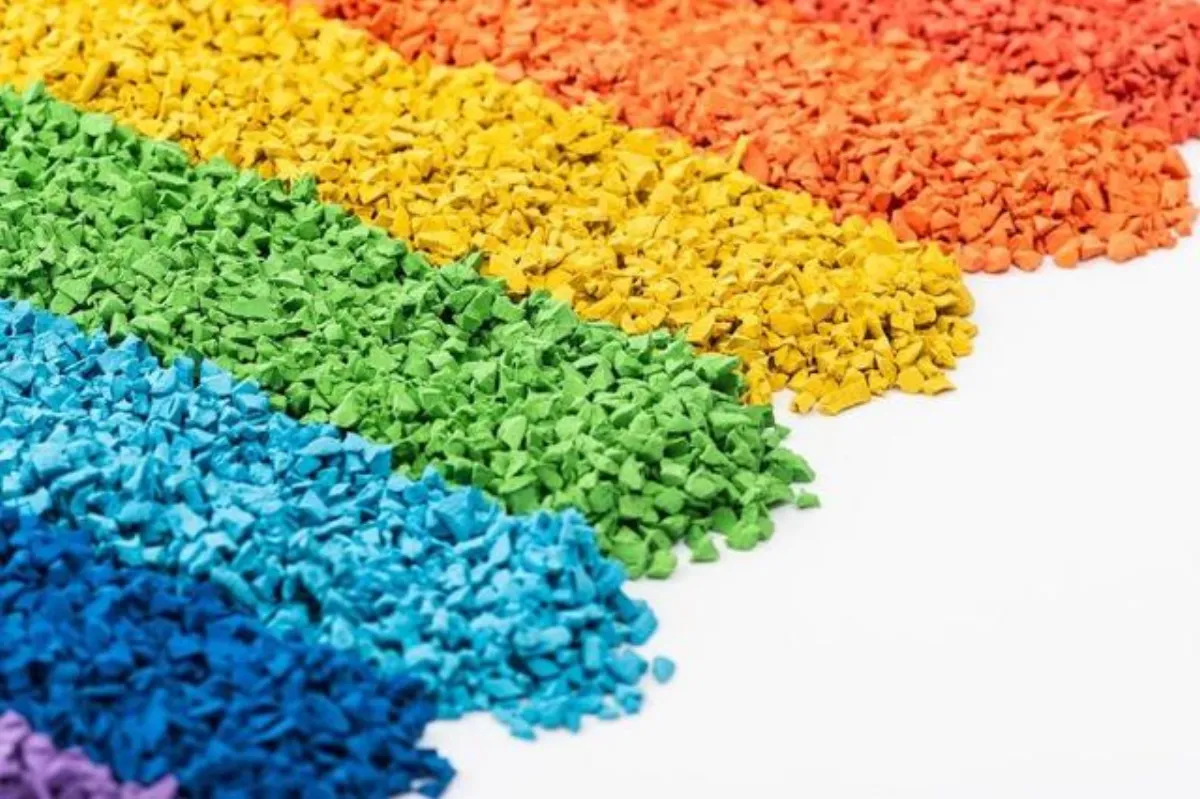
EPDM stands for ethylene propylene diene monomer. It is a virgin synthetic rubber manufactured specifically for sports and play surfaces.
The granule is colored all the way through, so scuffs and wear never expose a different shade underneath. It holds color under direct sun and stays flexible across a wide temperature range.
EPDM carries no recycled inclusions, which keeps every batch consistent. On a poured job that matters, because color is mixed on site and any variation shows up as banding across the finished slab.
In a layered system EPDM does the visible work. It is the surface children touch, the layer that takes shoe traffic, and the layer that decides how the installation looks in year 8.
What is SBR made of
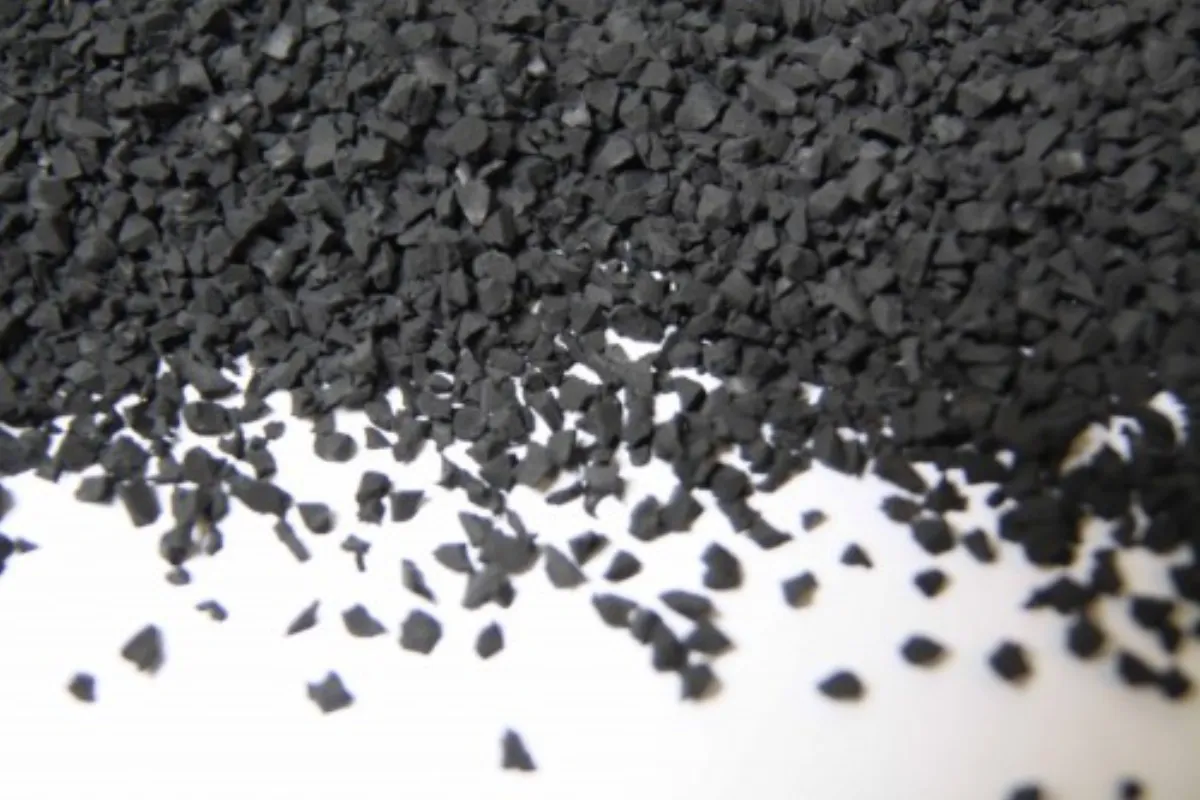
SBR stands for styrene butadiene rubber. The granule used in surfacing is recycled, milled from processed vehicle tires, which is why it arrives black and stays black.
It contains carbon black and runs at a higher density than EPDM. That density is the whole point. SBR absorbs impact energy efficiently and cheaply, so it is the sensible material for the part of the system nobody sees.
SBR forms the bulk of the thickness. On a playground built for a 6 foot fall height, the SBR cushion does almost all of the shock absorption while the EPDM cap contributes very little.
Used as a wear layer outdoors, SBR stiffens over time and loses surface texture under constant UV. That is a material limit, not an installation defect.
Which US standards apply here
In the United States playground surfacing is judged against ASTM F1292, the Standard Specification for Impact Attenuation of Surface Systems Under and Around Playground Equipment. Testing under F1292 produces a critical height rating, defined as the fall height below which a life-threatening head injury would not be expected to occur.
That rating has to equal or exceed the fall height of the tallest piece of equipment on site. The CPSC Public Playground Safety Handbook adds the layout rule, with the use zone extending a minimum of 6 feet in all directions from the equipment.
2 points get missed regularly. Neither EPDM nor SBR passes or fails on its own, because F1292 tests the assembled system at its installed thickness. And accessible routes across the surface fall under a separate standard, ASTM F1951, which measures the effort needed to push a wheelchair across it.
How each material handles Florida sun
3 things attack an outdoor surface in South Florida. Ultraviolet load is high year round, deck temperatures swing hard between afternoon sun and evening rain, and the surface stays wet longer than it would in a dry climate.
EPDM resists all 3 better. It fades slowly, resists surface cracking, and does not turn brittle from sun aging within a normal service life.
SBR under the same exposure gets stiffer, and the binder holding it loses flexibility first. The granule itself is durable, but as a top layer it dulls and hardens wherever sun lands on it directly.
Which leads to the arrangement the industry already settled on. SBR belongs underneath, shaded by the layer above it, and EPDM belongs on top where the sun actually falls.
How EPDM and SBR compare
Side by side on the parameters that decide a specification.
| Parameter | EPDM | SBR |
| Material type | Virgin | Recycled |
| Color | Any | Black only |
| Typical layer | 0.3 to 0.6 inch | 0.75 to 3 inches |
| UV resistance | High | Medium |
| Heat stability | High | Standard |
| Relative cost | Higher | Lower |
| Role in system | Wear layer | Cushion layer |
How a 2-layer system is built
Standard practice is a 2-layer build poured wet on site.
The bottom layer is SBR at 0.75 to 3 inches, set by the fall height the surface has to protect against. The top layer is EPDM at 0.3 to 0.6 inches, deep enough to wear well and carry color evenly.
Both layers are bound with polyurethane and troweled while still workable, so the 2 layers cure into each other instead of sitting as separate sheets.
Built this way the surface reaches the critical height the site needs, holds color through its service life, and costs far less than the same depth in all EPDM. It also stays permeable and drains straight through, which matters on a Florida site that sees afternoon storms most of the summer.
When EPDM is the right choice
EPDM is specified for the top layer wherever appearance and sun exposure both matter.
- public and school playgrounds
- childcare and preschool play areas
- HOA and condo amenity decks
- splash pads and pool surrounds
- any project with a defined color scheme
The cost premium buys color retention. On a surface expected to last 10 years or more in South Florida sun, that is usually the deciding factor rather than the initial price per square foot.
When SBR is the right choice
SBR is the correct material in 3 situations.
- as the cushion layer under any EPDM cap
- where budget is fixed and color is not required
- on utility and back-of-house areas with no design brief
SBR can also be used on its own where the surface sits under permanent shade or indoors, since the UV limitation is what rules it out on top. Outdoors and uncovered, an SBR wear layer will look noticeably older after 3 to 5 years than an EPDM one installed the same week.
Common questions on EPDM and SBR
Can a surface be built entirely of EPDM
Yes. It performs well and simplifies the pour, but material cost rises sharply because EPDM replaces the cheaper cushion granule through the full depth.
Can SBR be used on its own
Indoors or under cover, yes. As an exposed top layer outdoors it is the less durable option and will stiffen and dull.
How thick should each layer be
The SBR cushion normally runs 0.75 to 3 inches, set by fall height. The EPDM wear layer runs 0.3 to 0.6 inches.
Does the granule choice decide the safety rating
No. ASTM F1292 rates the finished system at its installed thickness, so build and depth decide the outcome.
What to take away
SBR and EPDM serve different purposes inside one system. SBR supplies shock absorption and forms the base. EPDM supplies durability, weather resistance and appearance.
The question is not which material is better. It is how to combine the 2 correctly, and for outdoor work in Florida that answer is a 2-layer SBR and EPDM surface, sized to the fall height the site requires.