How We Work: Professional Installation Process
Every poured surface we install follows the same five steps, in the same order, whether it is a 400 sq ft pool surround in Hollywood or a 6,000 sq ft school play area in Broward County. The sequence exists because surfacing failures are almost never caused by the material — they are caused by something that was skipped before the material went down.
What follows is exactly what happens on a B-Cool job, what we check at each stage, and what you get in writing.
1 · Site visit and base check
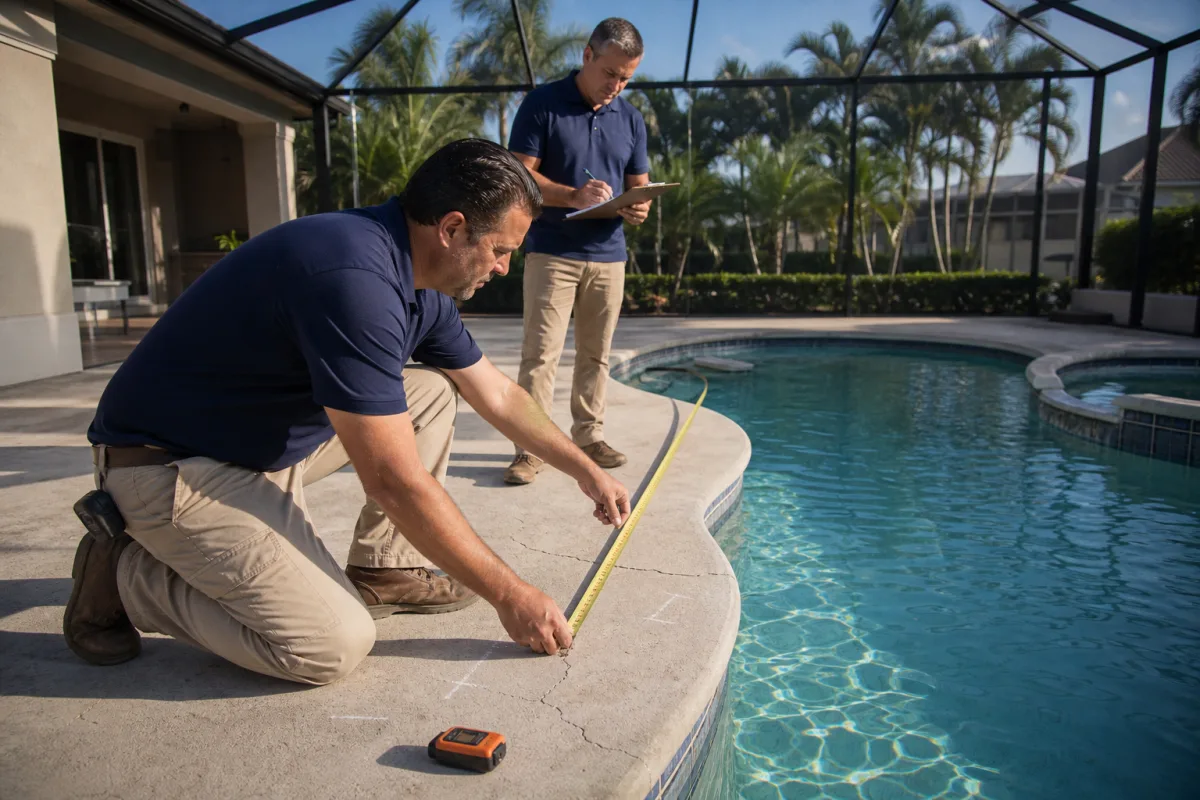
We come out, measure the area properly, and — more importantly — look at what is underneath it. A poured surface is a wear layer. It cannot fix a slab that moves, drain a yard that ponds, or bond to concrete that is passing moisture vapour.
On the visit we check:
- Substrate type and condition. Concrete, asphalt, pavers or compacted aggregate. Cracks, spalling, delaminated patches, previous coatings and sealers.
- Flatness. Straightedged across the area. High and low spots get marked, because both will show through the finished surface.
- Falls and drainage. Where does the water go now, and where does it need to go. This is the single most consequential thing we look at in this climate.
- Slab moisture. Florida slab-on-grade construction frequently reads high. A moisture number taken at the visit decides whether the system starts with a standard primer or a moisture-tolerant one.
- Use and traffic. Barefoot pool deck, wheeled traffic, PE classes, dog runs, vehicular loading — each pushes the specification in a different direction.
- Access and logistics. Where the mixing station goes, how material reaches the far corner, what has to be protected or masked.
Where the area is a play zone with equipment on it, we also record fall heights, because the surface thickness is set by them. Those zones are designed to ASTM F1292, the US impact-attenuation standard for playground surfacing, which ties the required surface thickness to the critical fall height of the equipment above it.
The visit is free and it is not a sales call. If the honest answer is that your slab needs replacing rather than resurfacing, or that a different surface type suits your use better, you will hear that on site rather than after a deposit.
2 · Fixed quote
Within a working day of the visit you get a written quote, and the number on it is the number you pay. It is built from the measured area and the conditions we actually found — not from a rate card and an optimistic guess about the base.
The quote sets out:
- The surface system, its build-up layer by layer, and its finished thickness
- Colours, aggregate or granule selection, and any line marking or inlay work
- Every item of base preparation and repair the site needs, priced individually
- Edge detailing — restraints, transitions to existing hardscape, drain and fixture cut-ins
- The working schedule, including cure time before the surface can be used
- The written warranty and what it covers
Base repairs are priced up front, in the quote, because that is where surfacing jobs normally go wrong financially. Nobody enjoys a change order discovered on day two with the grinder already running.
3 · Base preparation and priming
This is the least glamorous stage and the one that decides whether the surface lasts ten years or two. Depending on what the site visit found, it involves:
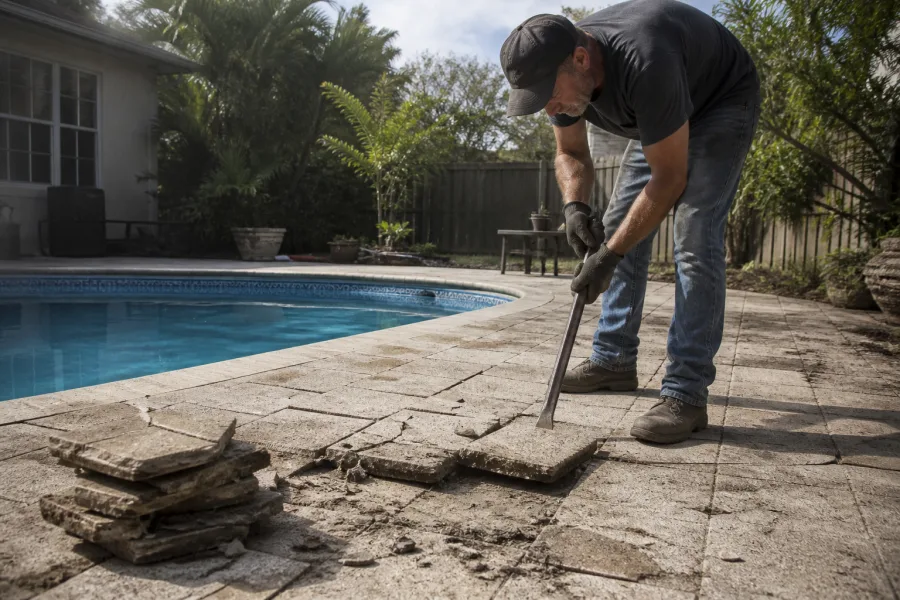
- Mechanical preparation. Grinding or shot-blasting concrete to open the pore structure and take off laitance, old sealer and coatings. Nothing bonds to a sealed slab.
- Crack and spall repair. Cracks routed out and filled; delaminated and spalled areas cut back to sound material and rebuilt with epoxy mortar.
- Correcting falls. Low spots filled and gradients adjusted so water leaves the surface instead of sitting on it.
- Edges and restraints. Curbing, edge trims and transitions set to the finished level before anything is poured.
- Cleaning. Vacuumed, not swept. Residual dust under a primer is a bond breaker.
- Priming. Full-coverage primer at the coverage rate the system's data sheet specifies — moisture-tolerant where the readings call for it.
Priming and pouring have to happen inside the primer's overcoat window, which is why base prep and installation are scheduled as one continuous block of work rather than two visits.
4 · Pour and install
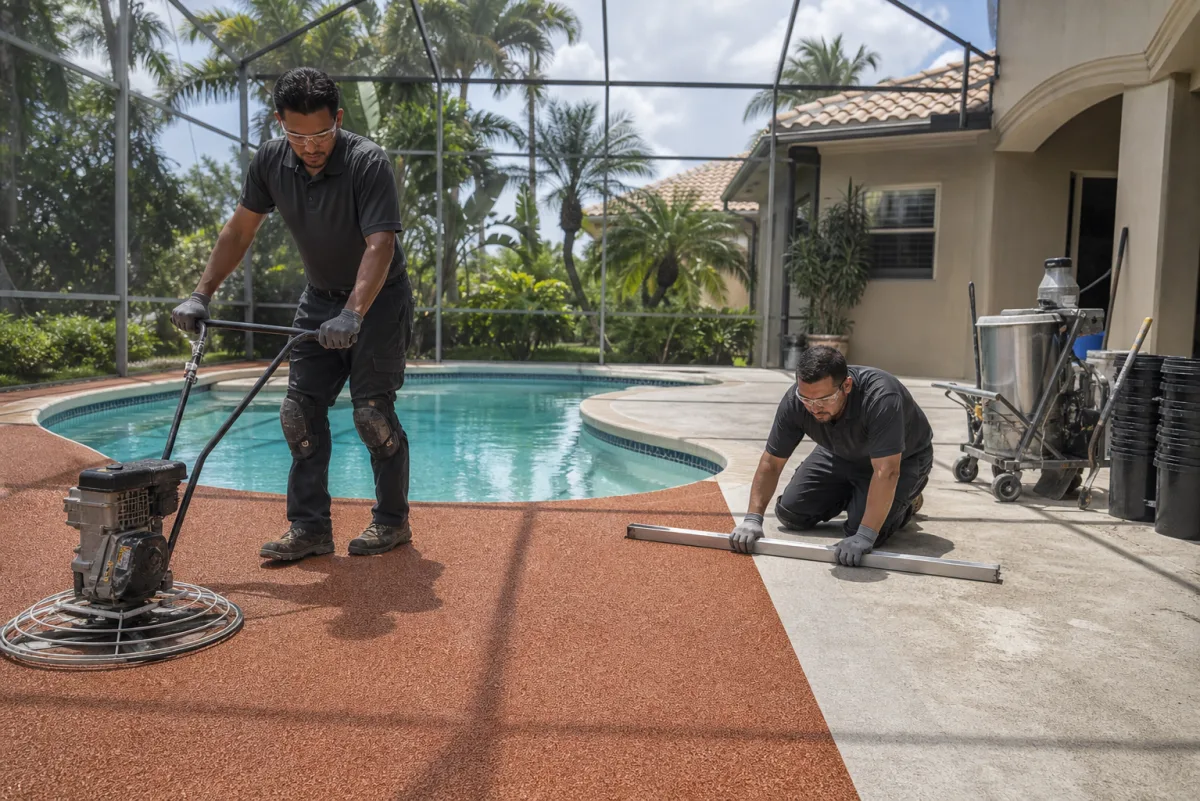
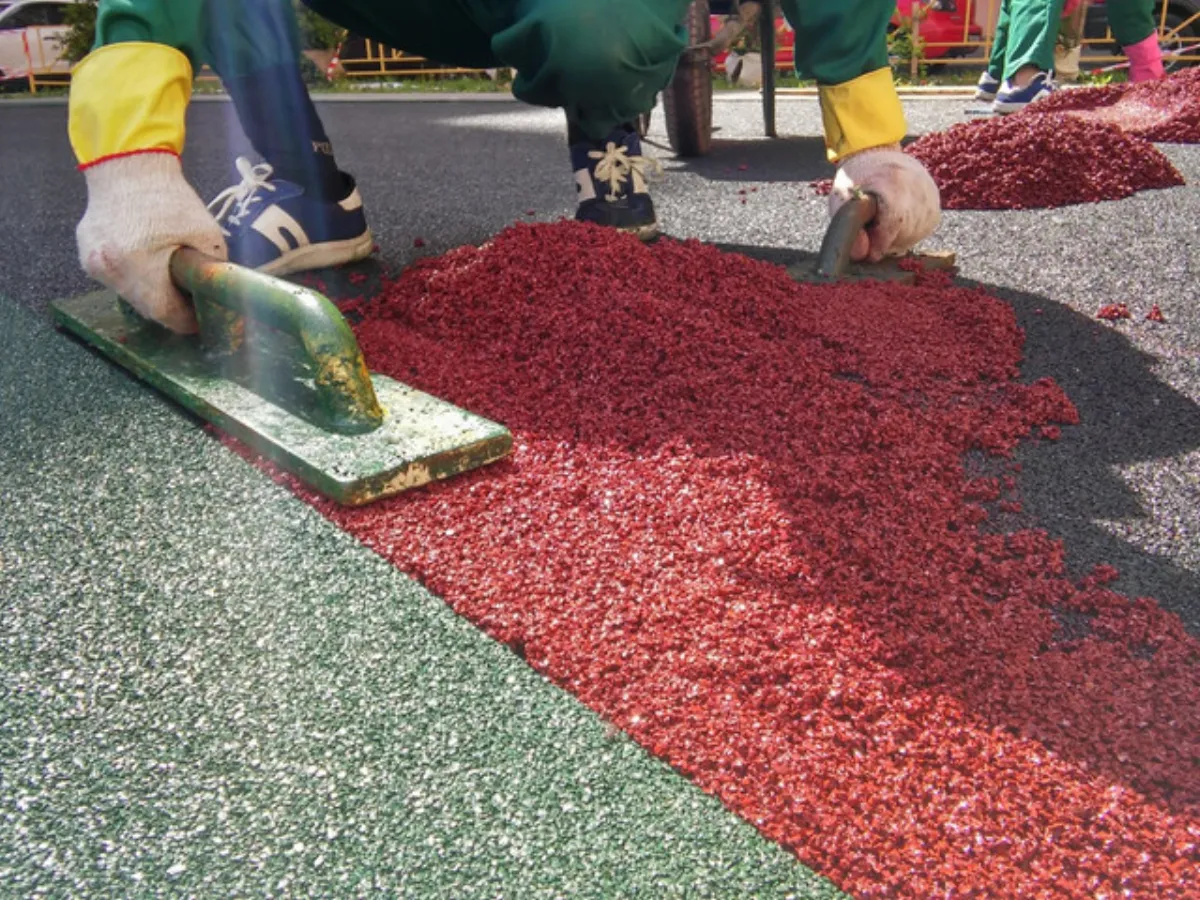
Material is mixed on site in controlled batches — granulate and binder, or aggregate and resin, weighed rather than estimated. Mixed material is placed immediately, screeded to the specified thickness, and trowelled to a consistent texture. On multi-colour and multi-layer work, sections are set out and masked before any material is opened.
Two things govern the schedule here, and both are climate-driven:
- Working time. Polyurethane and epoxy binders lose working time fast as temperature rises. On a hot slab a batch that would give half an hour at 68 °F gives half that. We mix small, start early, and keep material shaded.
- Rain. A storm on a surface that has not skinned over ruins the batch. Exterior work is scheduled against the forecast, and we would rather stop a pour than gamble on a cell passing to the north.
Wet edges are kept live so that adjoining passes knit together without a cold joint. Line marking, where the job includes it, is set out from measured control points and applied only after the surface has fully cured.
5 · Cure and handover
The surface is barriered off for its cure period — typically foot traffic after 24–48 hours and full strength at around seven days, depending on the system and the weather. We come back at the end of it rather than leaving you to judge when it is ready.
Handover is a walk of the finished area together, checking edges, transitions, drains, texture and marking against the quote. You get:
- A written acceptance record of the completed work
- The warranty documentation, with its terms and its coverage stated plainly
- Care instructions for the specific system installed — what to clean it with, what not to, and what to watch for
- A named contact for anything that comes up afterwards
Our warranty runs two years, in writing, and covers defects arising from our workmanship. If something we did fails inside that period, we come back and fix it at our expense.
Typical timelines
| Project size | On-site work | Before normal use |
|---|---|---|
| Up to 540 sq ft — patio, small pool surround, entry area | 1–2 days | Add 24–48 hours cure |
| 540–1,075 sq ft — court, play area, driveway apron | 2–4 days | Add 24–48 hours cure |
| 3,200–5,400 sq ft — school yard, HOA amenity deck, sports facility | 7–14 days | Add 24–48 hours cure |
Timelines go in the quote and are held to. Extensive base repair, phased access, or a run of afternoon storms will extend them — and if that happens you hear about it the day it happens, not at the end.
What we install
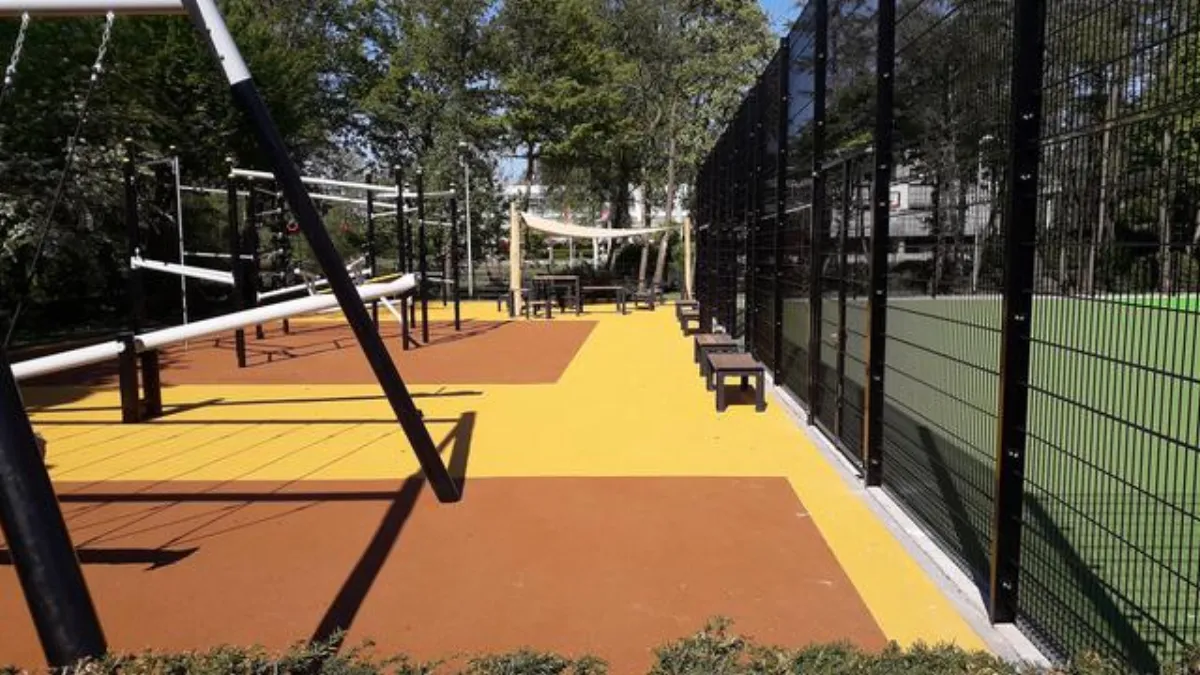
- Poured-in-place rubber. Seamless SBR or EPDM granulate systems for playgrounds, paths, pool decks and gym areas.
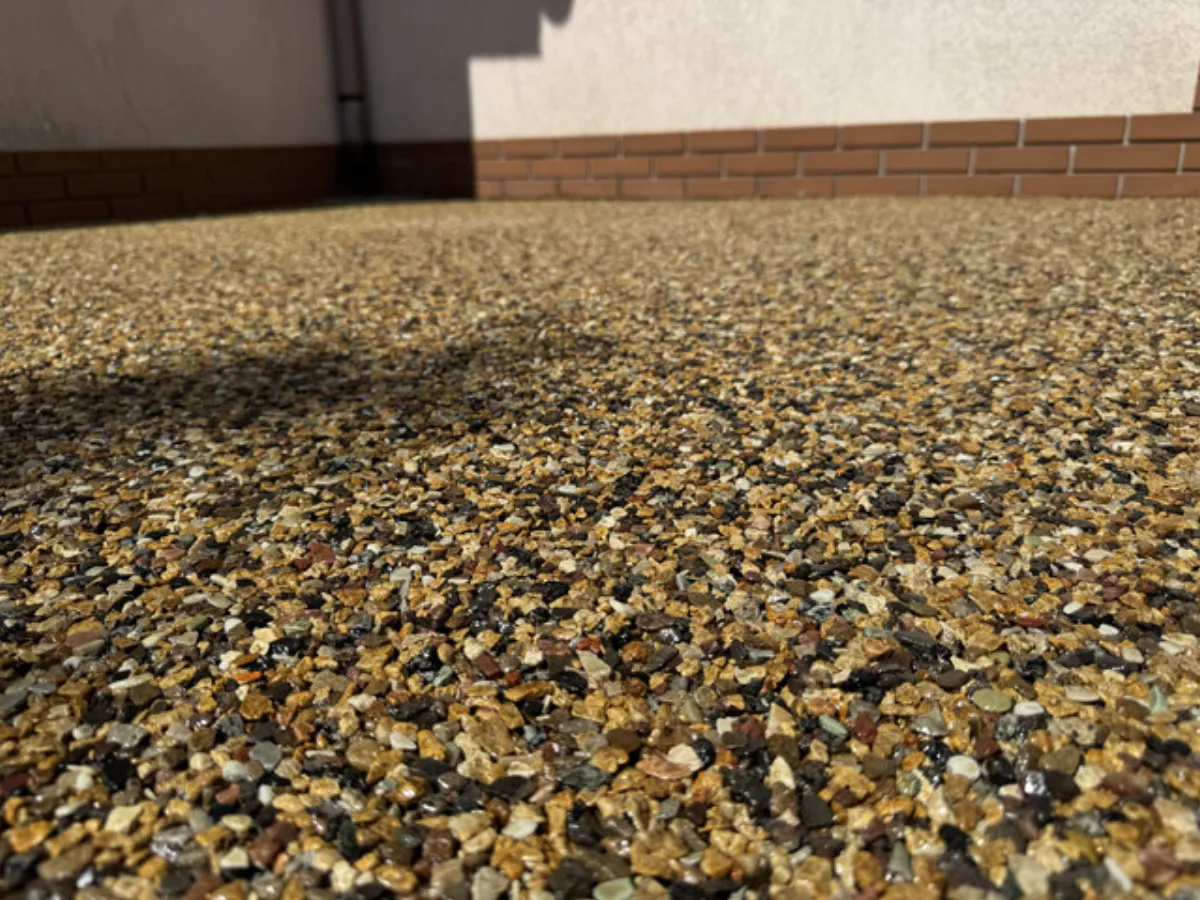
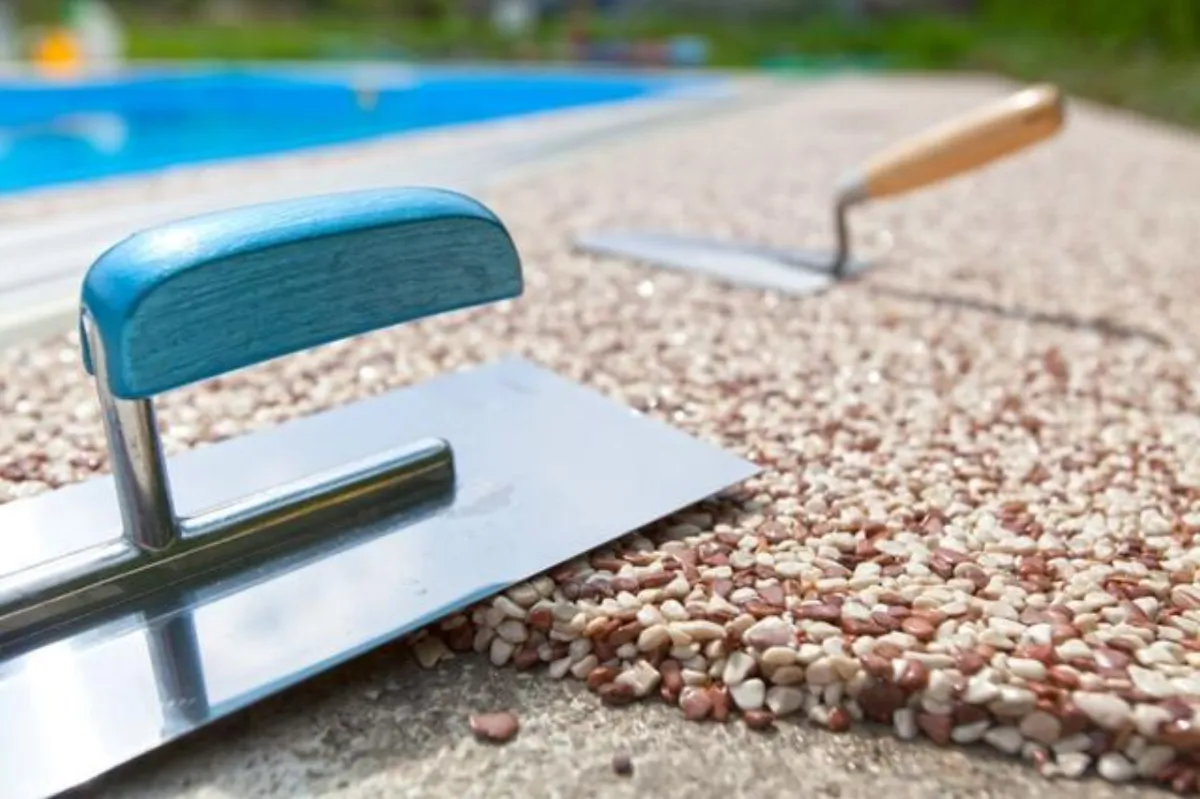
- Stone carpet. Decorative bound aggregate — water-permeable, slip-resistant, laid over existing concrete.
- Sports courts and running tracks. Base, surface system, line marking and edge detailing.
- Resurfacing and repair. Renewing a worn wear layer over a sound existing base, and repairing localised damage.
Why clients stay with us

- Everything in writing. Scope, price, schedule and warranty are fixed in the contract before work starts.
- Specified materials. SBR and EPDM granulates, UV-stable fibres, and binders selected for exterior Florida exposure rather than whatever is cheapest that week.
- Ten years and 150+ completed projects. Playgrounds, schools, stadiums, HOAs, condominiums and private homes.
- A two-year written warranty. Defects attributable to our work are corrected at our cost.
- Tri-county coverage. Crews working across Broward, Miami-Dade and Palm Beach.
- One point of contact. The same person from the first site visit through to handover.
Questions we get asked
Is the site visit really free?
Yes, including measurement, the substrate and moisture check, and the written quote that follows it. We do it because quoting surfacing accurately from photographs is not possible, and a quote built on guesswork helps nobody.
Does the base always need preparing?
Always, to some degree. Even a sound, well-drained slab needs mechanical preparation and priming before a poured system will bond to it properly. What varies is how much repair sits on top of that, which is exactly what the site visit is measuring.
How long does installation take?
A 540–1,075 sq ft court or play area is typically 2–4 days on site; a 3,200–5,400 sq ft project runs 7–14 days. Add 24–48 hours of cure before foot traffic, and around a week before heavy use. The schedule is fixed in the quote.
Can you pour over my existing concrete?
In most cases, yes — resurfacing sound concrete is a large part of what we do. It is not possible where the slab is actively moving, where it is heavily contaminated with oil or old sealer that cannot be removed, or where moisture vapour transmission is too high to coat over. The site visit establishes which situation you are in.
What happens if it rains mid-project?
We stop before the pour rather than during it. Uncured binder and rain do not coexist, so exterior work runs against the forecast and we would rather lose an afternoon than have to grind a ruined section off and start again. Weather delays are communicated the same day.
Do you work outside Hollywood?
Across Broward, Miami-Dade and Palm Beach counties. Travel is accounted for in the quote, and for larger projects the site visit is free regardless of where in the tri-county area you are.
What does the warranty cover?
Two years in writing, covering defects attributable to our workmanship — debonding, edge failure, texture and finish defects. It does not cover mechanical damage, movement in a substrate we did not build, or damage from cleaning products we advised against. All of that is stated in the document you receive at handover.
Who do I talk to once the crew has left?
The same person who ran your project. You get a named contact at handover, and warranty and maintenance questions go straight to them rather than into a general queue.