Running Track & Court Line Systems
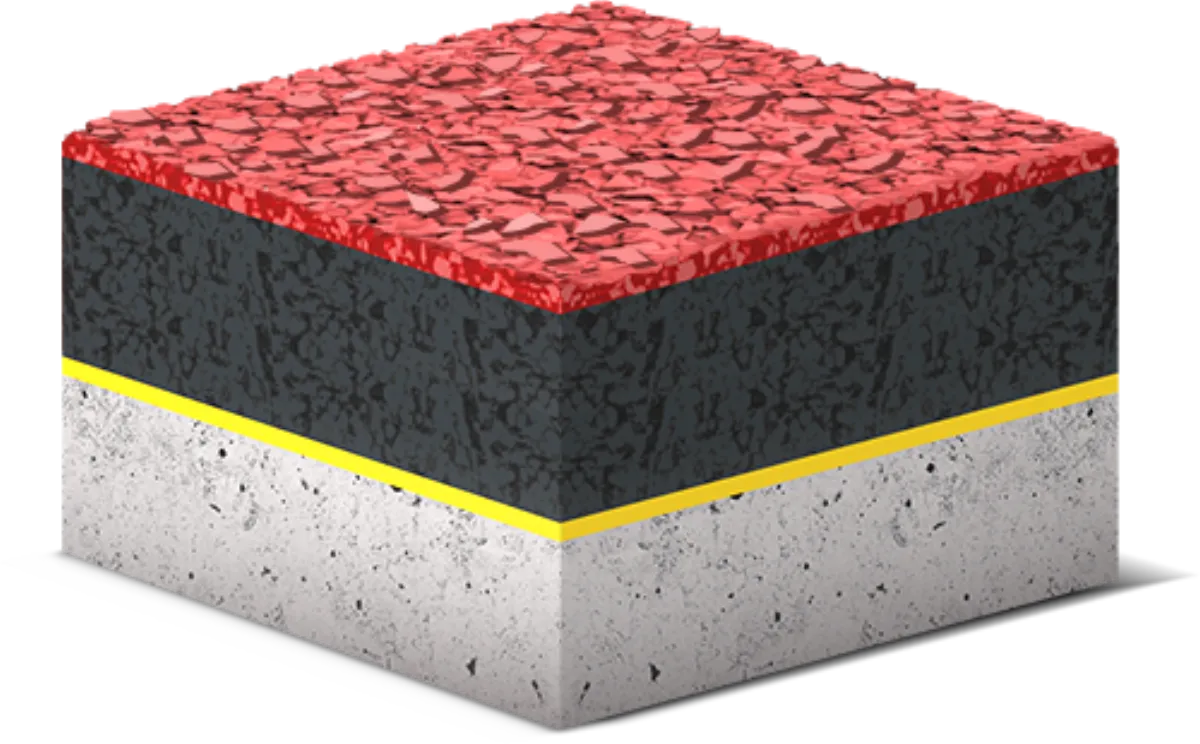
A synthetic running track is a layered system built on an asphalt or concrete base. Above the base sit a polyurethane primer, a bound SBR resilient layer that carries most of the depth, a colored EPDM wear layer and 2-component polyurethane line paint. Resilient layers run roughly 0.4 to 0.5 inch on school and park tracks and thicker on competition builds. A correctly installed track lasts 8 to 15 years before the wear layer needs renewal.
A running track has a harder job than almost any other outdoor surface. It has to return energy to a runner stride, absorb impact that would otherwise land in shins and knees, shed a South Florida downpour without ponding, and hold its color and its line geometry through a decade of direct sun. Those 4 demands separate a purpose built track system from ordinary poured rubber.
Tracks, straightaways, jogging loops and multi use court areas are built, resurfaced and re-lined across Broward, Miami-Dade and Palm Beach counties, on school and college facilities, municipal parks, HOA and condominium fitness loops and private training grounds.
How a track system is built up
Whatever the brand on the pail, a synthetic track is a stack of layers and each one does a single job. Understanding the stack is the fastest way to understand why 2 tracks that look identical can cost, and perform, very differently.
- Structural base. Asphalt or concrete, laid to the finished slopes of the track. Nothing above it can correct a base that is out of tolerance.
- Primer. A penetrating polyurethane or epoxy primer that locks down surface dust and gives the resilient layer something to bond to. Skipping or thinning the primer is the most common cause of delamination.
- Resilient layer. SBR granulate bound with polyurethane, or a prefabricated rubber mat. This is where shock absorption and energy return come from, and it accounts for most of the depth of the system.
- Wear layer. Colored EPDM granulate in a polyurethane matrix, either broadcast into a wet resin, sprayed on, or cast as a sealed film. This layer takes the spikes, the UV and the rain.
- Line marking. 2-component polyurethane marking paint applied after the wear layer has fully cured.
Why EPDM sits on top and SBR underneath. SBR is recycled rubber granulate, dense, cheap and very good at swallowing impact, but it is black and it stiffens under long UV exposure. EPDM is virgin synthetic rubber, colored all the way through and UV stable. Putting SBR where the load is and EPDM where the sun is delivers both properties without paying for a full depth EPDM build.
The 4 system families

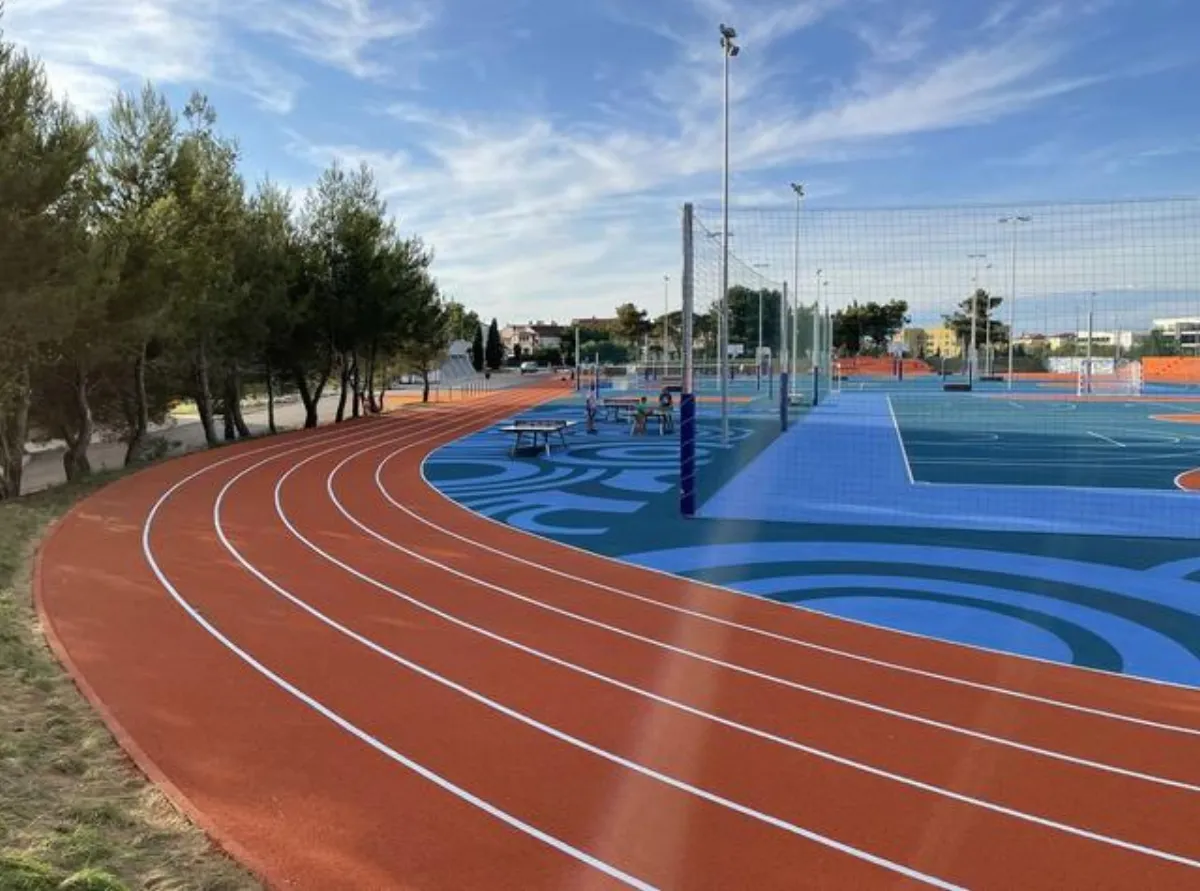
Track systems sort into 4 families. Product names change from one manufacturer to the next, and most specifications name a proprietary product line rather than a construction type, but the construction underneath, and therefore the behavior, is consistent across brands.
| System family | Construction | Best suited to | Water behavior |
|---|---|---|---|
| Single layer bound rubber | SBR or EPDM granulate mixed with a polyurethane binder and troweled in one pass | School yards, park loops, HOA and condominium fitness paths | Permeable, drains through the surface |
| Structural spray | Bound rubber base with a sprayed polyurethane and EPDM wear coat on top | Community sports clubs, training tracks, indoor facilities | Permeable |
| Cast full polyurethane | Solid cast polyurethane over a bound base, sealed and textured | Competition tracks and stadium facilities | Impermeable, needs correct surface slopes |
| Sandwich | Prefabricated rubber base mat plus a cast polyurethane wear layer | Stadiums and high volume training venues | Impermeable |
The practical difference is shock absorption against cost. A single layer bound system is the right answer for a middle school practice loop. It will not feel like a stadium track, and it does not need to. A sandwich or cast system has noticeably more spring underfoot, which matters when athletes run high weekly mileage on one surface, and it costs several times more per square foot to build.
Matching the system to the facility
Schools and childcare grounds
Durability and safety come ahead of performance. A single layer bound system in a bright color, laid over sound asphalt, handles PE classes, recess and after school programs.
Where a track passes through or borders a play area with equipment, that zone is designed to ASTM F1292, which sets a critical height rating against the fall height of the equipment. The CPSC Public Playground Safety Handbook adds a use zone of at least 6 feet in all directions, and ASTM F1951 covers any accessible route crossing the surface.
Park and municipal loops
Walking and jogging paths, bike path shoulders and perimeter loops around municipal fields. These are permeable systems, chosen so that rain drains through the surface rather than sheeting across the path and washing grit into the lanes.
HOA, condominium and corporate fitness
Rooftop and courtyard loops, wellness paths between buildings and short training straightaways. Weight on the structure, drainage detailing and noise transmission usually matter more here than competition specification.
Competition and stadium tracks
Cast polyurethane or sandwich construction, built to the geometry and performance criteria published by World Athletics, formerly the IAAF. Certification is issued by the governing body to a specific manufacturer product and a specific installation, never to a contractor in general. A project that needs a certified surface has to specify a certified product family and coordinate testing and documentation with the manufacturer.
What the base has to look like first
A track system is only as flat, as dry and as well drained as what it is poured onto. The base is checked against the numbers the resin manufacturers publish before any system is quoted.
- Flatness. Within about 0.12 to 0.2 inch under a 6 foot straightedge. Anything worse shows up as a visible ripple in the finished lane and as a puddle after rain.
- Slopes. A 1 to 2 percent fall to the drainage side. On impermeable cast and sandwich systems this is not negotiable, because the water has nowhere else to go.
- Residual moisture. Up to 5 percent in the slab. Florida slabs frequently sit above that, so a moisture reading belongs in every site visit.
- Priming. Mandatory over the whole area, at the coverage rate the data sheet for the system specifies.
- Installation window. Substrate and air between roughly 50 and 86 degrees F, with no rain forecast inside the cure window. In summer that usually means early morning starts.
Where the existing asphalt or concrete is cracked, spalled or holding water, base repair belongs in the price of the job rather than being discovered halfway through it. That is the whole point of the site visit.
Line marking and court layouts
Lines go on after the wear layer has cured, using 2-component polyurethane marking paint rather than traffic paint. Lane lines, exchange zones, start and finish geometry and overlaid court layouts for basketball, pickleball, tennis and volleyball are set out from measured control points, masked, then sprayed or rolled.
Because marking paint is a surface film, it is the part of the system that wears first. Refreshing lines on an otherwise sound track is a routine, low cost job, and it is worth doing before the geometry becomes hard to read rather than after.
Where a court shares the surface with a track, the governing body spec for each sport sets the line widths, colors and dimensions, and conflicting layouts are separated by color so players can read the right set at a glance.
What South Florida does to a track
- UV. Continuous and year round, and the reason the wear layer is EPDM rather than a pigmented film over SBR. Color loss on a track is almost always a specification problem, not a maintenance problem.
- Heavy rain. Afternoon storms drop more water in 20 minutes than the drainage design of a northern track ever has to handle. Permeable systems need a base that actually drains, and impermeable systems need slopes that actually fall.
- Standing water. Ponding is what kills tracks here. It softens the bond line, breeds algae in the texture and makes lanes slick. Every low spot found at survey gets corrected during base prep.
- Heat during installation. High slab temperatures shorten the working time of polyurethane binders considerably, which is a scheduling issue as much as a chemistry one.
How long a track lasts
Correctly installed and maintained, a track surface runs 8 to 15 years before it needs a wear layer renewal. Where it lands in that range depends on traffic volume, the quality of the base underneath and how consistently the surface is kept clean.
Maintenance is undemanding. Rinse debris and organic growth off the surface, keep drains and edges clear so water leaves the track, repair small mechanical damage promptly rather than letting water get under the wear layer, and inspect an outdoor track every 2 years.
A track that gets that treatment can usually be renewed with a fresh wear layer over the original resilient base, which costs a fraction of a full rebuild and keeps the structural base in service for another decade.
Common questions on track systems
Which system suits a school running track
A single layer bound rubber system in almost every case. It gives adequate shock absorption, stands up to PE class traffic and is the most economical way to cover a large area. Where the budget allows and the track sees serious training volume, a structural spray system adds a tougher, more uniform wear surface for a moderate step up in cost.
Whether a certified track is necessary
Only if the facility will host sanctioned competition. World Athletics, formerly the IAAF, certifies surfaces for official track and field events, and certification attaches to a specific product installed to a specific specification and then field tested. School, municipal and community facilities do not need it. Regional competition venues and above generally do, which pushes the build toward cast polyurethane or sandwich construction.
How a sandwich system differs from a cast one
A cast system is polyurethane poured onto a prepared base, where it cures into one monolithic layer. A sandwich system uses a factory made rubber base mat for the resilient layer, with a cast polyurethane wear layer on top. The sandwich build costs more but has more spring, because the shock absorption of the base mat is manufactured under controlled conditions rather than mixed on site.
What condition the base has to be in
Concrete or asphalt, flat to within about 0.12 to 0.2 inch under a 6 foot straightedge, with a 1 to 2 percent drainage fall and residual moisture no higher than 5 percent. Priming is mandatory. The technical data sheet for each system sets the full list, and the site is checked against it before quoting rather than after starting.
Whether lines can be added or changed later
Yes. 2-component polyurethane marking paint is applied after the surface has fully cured, and it can be refreshed, extended or set out again on an existing track. Adding pickleball or basketball layouts to an existing multi use area is routine work and does not require touching the surface system underneath.
Whether these systems work indoors
All 4 families do. Indoors the controlling factors are slab moisture, no higher than 5 percent residual, and keeping substrate and air temperature inside the 50 to 86 degrees F installation window. Ventilation during application and cure also has to be planned, since polyurethane systems release solvent vapor as they cure.
How long the surface will last
8 to 15 years with correct installation and routine cleaning. Load intensity, base quality and drainage decide where a given track falls in that band. Outdoor tracks in this climate benefit from an inspection every 2 years so small damage is repaired before water gets beneath the wear layer.