Stone Carpet Technology: Systems, Fractions, Installation
Stone carpet is natural aggregate bound with clear polyurethane resin, mixed and troweled on site into 1 seamless, water permeable surface. Foot traffic areas are built 0.3 to 0.6 inches thick and driveways 0.6 to 0.8 inches. Outdoors the binder has to be aliphatic, because aromatic resin ambers within 1 to 2 seasons and the change is obvious on white marble. A correctly installed deck lasts 10 to 15 years or more.
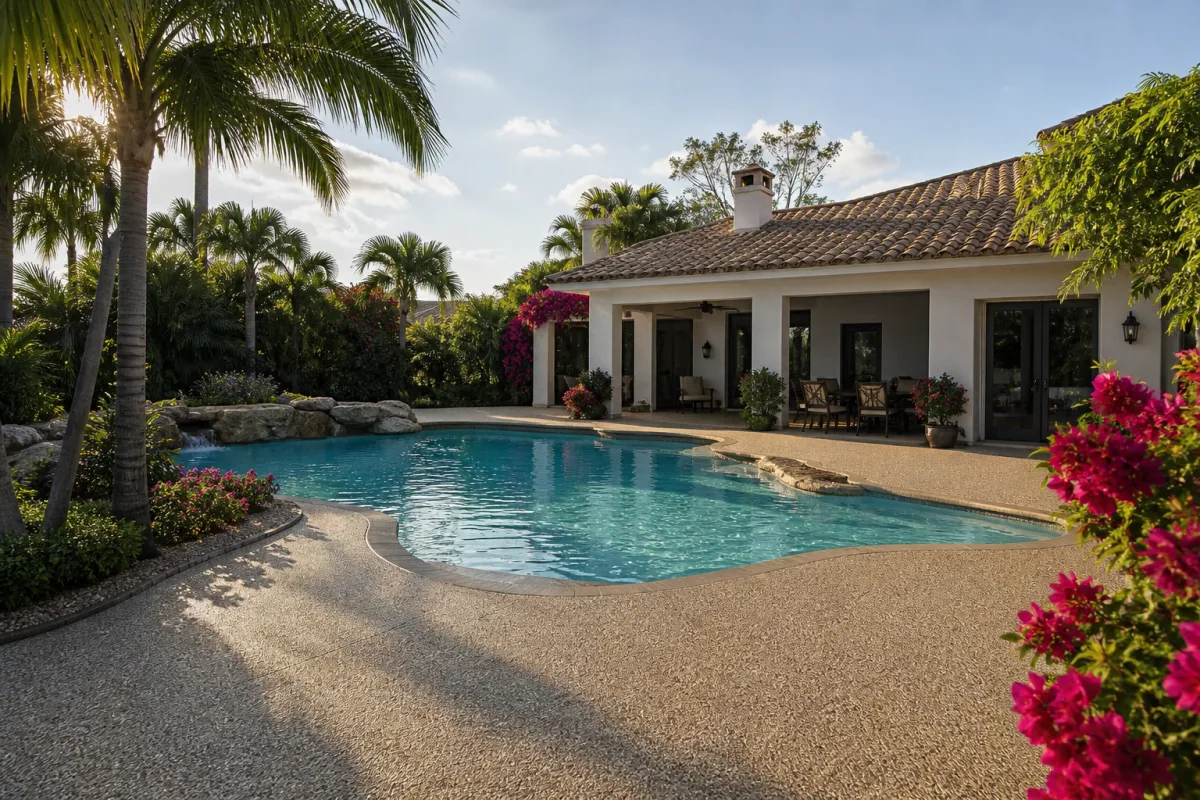
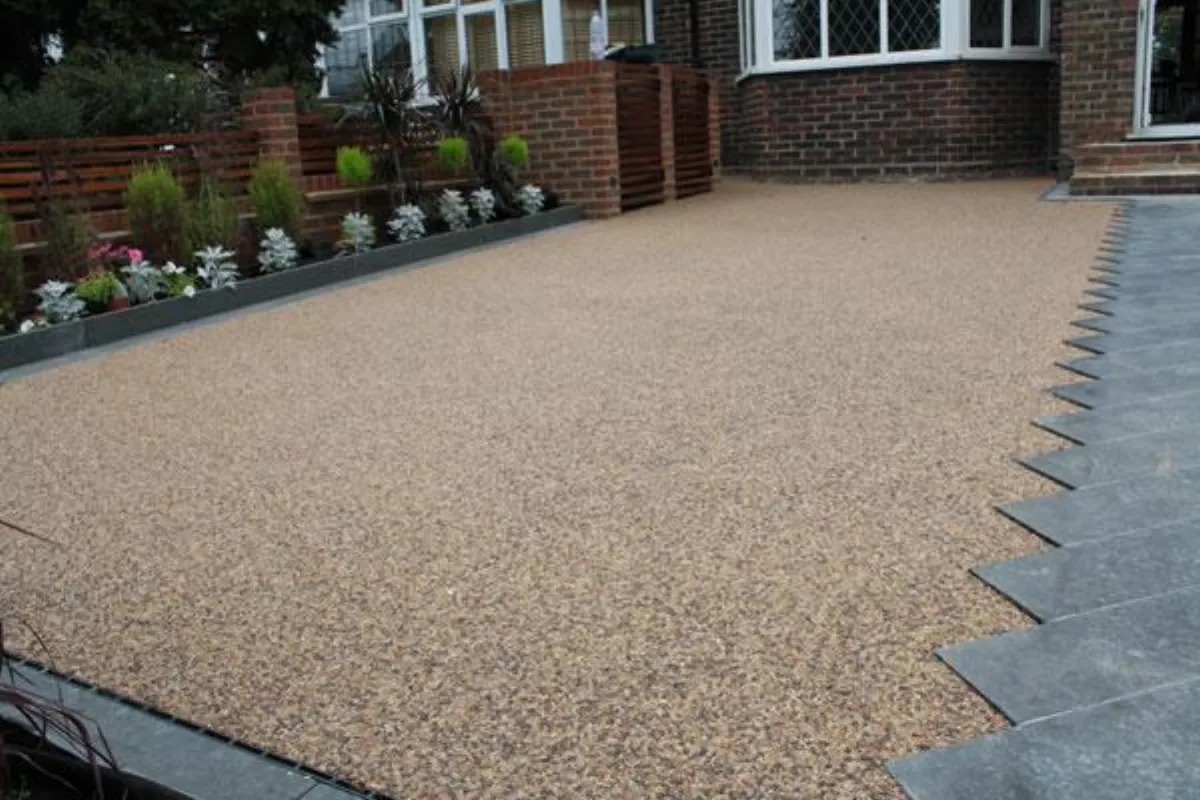
Stone carpet is a seamless decorative surface made from natural aggregate, whether marble chip, river pebble, quartz sand or gravel, bound with a clear polyurethane resin. It is mixed and troweled on site, cures into one continuous sheet, and stays water permeable. The stone stays visible and the resin only holds it together.
How the system is built up
- Base. Any sound hard surface works, including concrete, asphalt, timber decking and metal. Concrete is ground and vacuumed. Asphalt is checked for live cracks first.
- Primer. A penetrating polyurethane primer seals the base and gives the resin something to key into.
- Wearing layer. Aggregate and resin are mixed by weight, spread and troweled flat. Typical build is 0.3 to 0.6 inches for foot traffic and 0.6 to 0.8 inches where vehicles run.
- Cure. Light foot traffic after about 24 hours, with full cure in 2 to 3 days depending on humidity.
The whole build adds well under an inch of height, which is why it works over an existing deck without raising thresholds or fouling door swings. A slab of 400 sq ft is normally primed, poured and walkable inside 2 working days.
Why the binder matters more than the stone
There are 2 families of polyurethane binder and only one of them belongs outdoors in Florida.
- Aliphatic. UV-stable. It stays clear for the service life of the surface, so white marble stays white. This is the correct specification for every exterior installation.
- Aromatic. Cheaper, but it ambers in direct sunlight within 1 to 2 seasons. Acceptable only in fully shaded interiors.
The 2 resins look identical in the pail and cost differs by roughly 30 percent, so binder type is the first line item to check when a quote for an exterior deck comes in unusually low. The aggregate is the visible part of the job, but the binder decides how the deck looks in year 5.
How to choose the aggregate
The aggregate sets the look, the texture underfoot and most of the material cost.
| Aggregate | Appearance | Suited to | Relative cost |
|---|---|---|---|
| Marble chip | White, cream, gray, angular and bright | Terraces, entryways, pool surrounds | Higher |
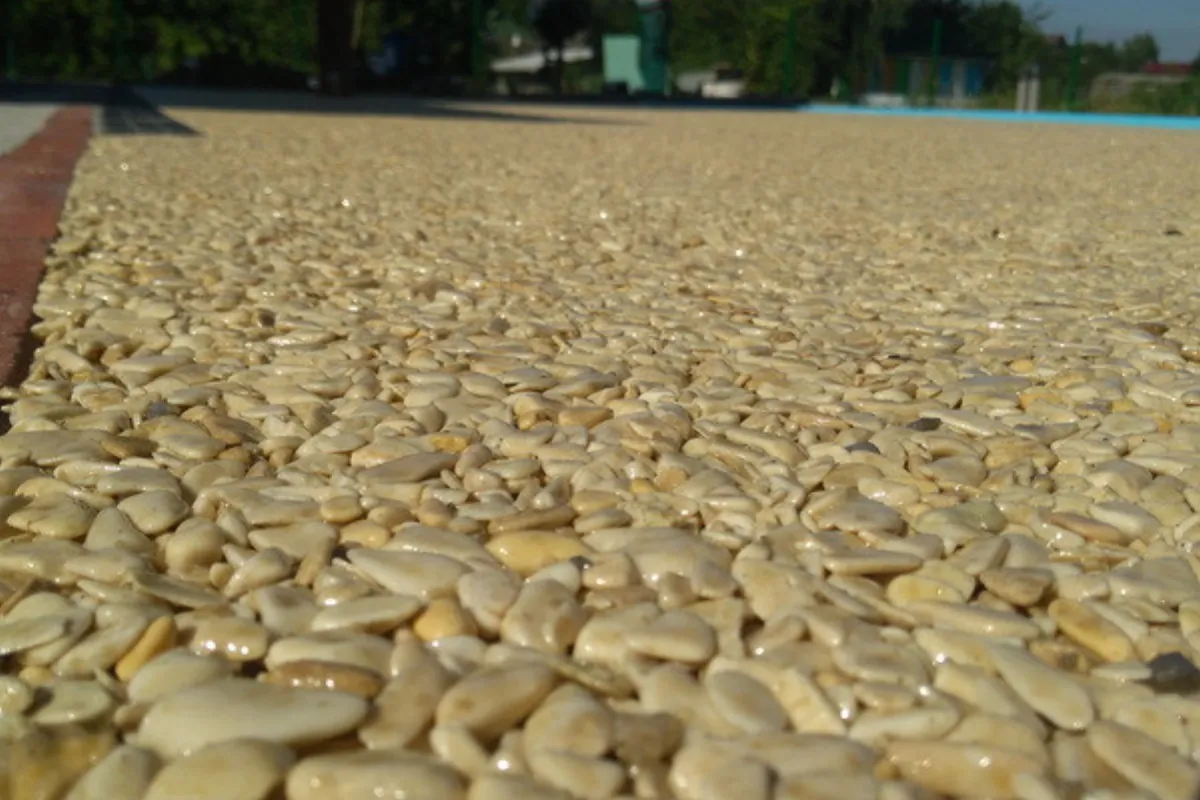
| River pebble | Warm natural tones, rounded | Garden paths, pool decks | Mid |
| Quartz sand | Fine fraction, smooth finish | Interiors, stair treads, tight details | Lower |
| Gravel and crushed stone | Coarse, rugged texture | Driveways, parking aprons, service areas | Lower |
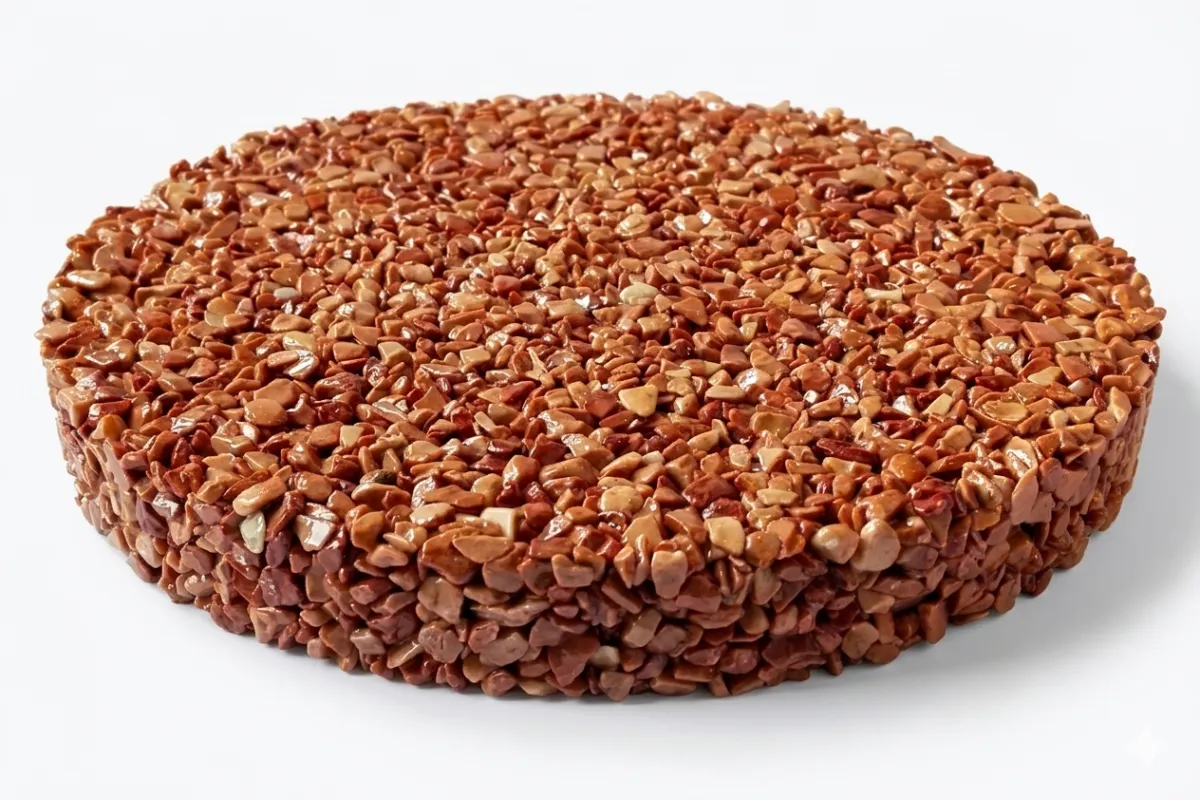
Fraction size matters as much as color. A fine 0.04 to 0.12 inch aggregate reads as a smooth, almost solid surface. A 0.2 to 0.3 inch pebble leaves individual stones visible and gives a more textured tread that grips better barefoot. Physical samples are worth asking for, because the difference is far clearer in the hand than on a screen.
What system options exist
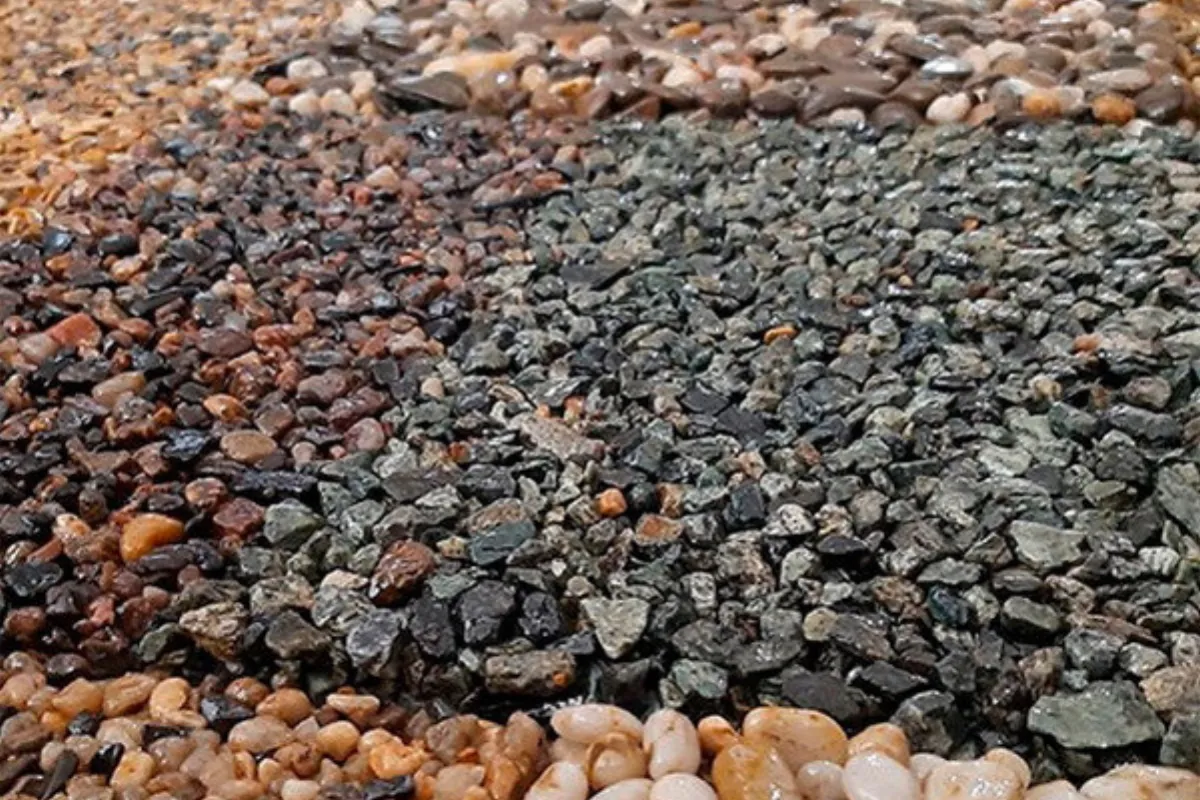
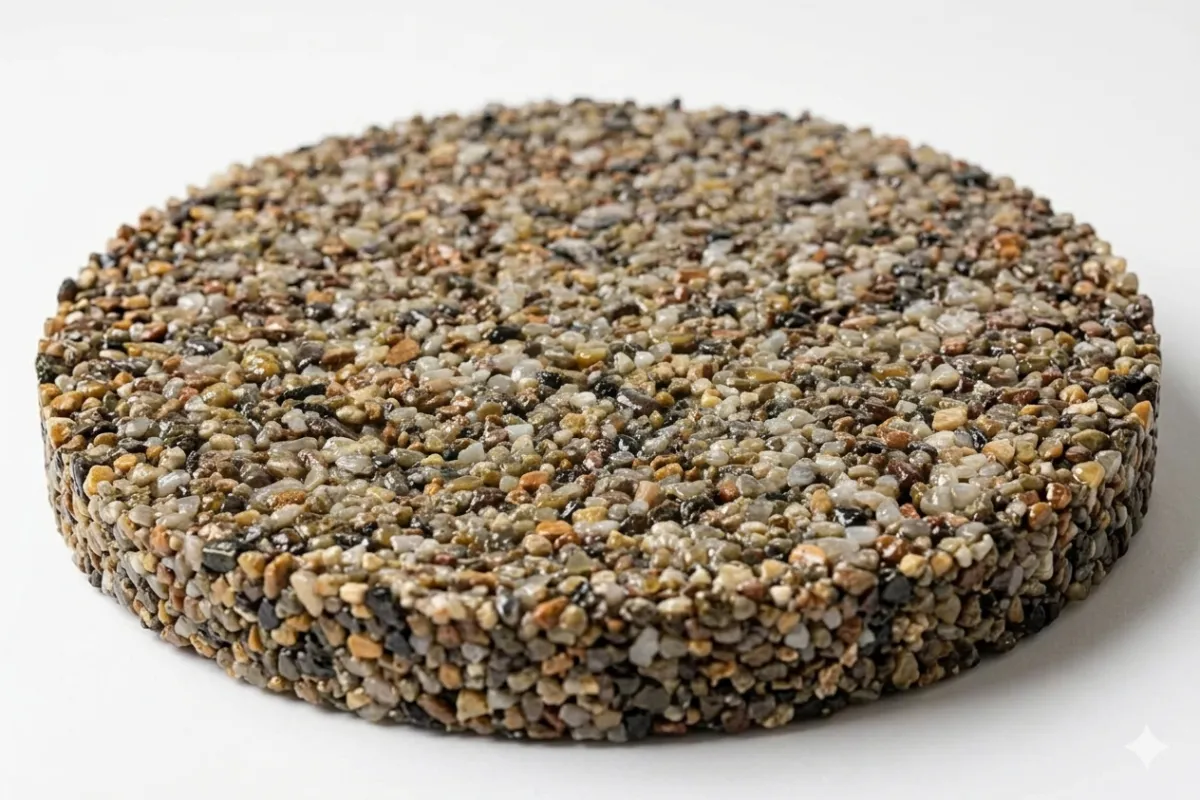
- Stone carpet. Crushed natural stone on polyurethane resin. The heavy-duty build, which carries vehicle loads and works as an alternative to asphalt or pavers.
- Pebble carpet. Rounded mineral aggregate on the same binder. It reads like loose pebble fill but is bound solid, so nothing migrates and nothing tracks into the pool.
- Marble finish. Porous and water permeable, with the brightest and most formal appearance. Common on entryways and terraces.
All 3 use the same primer and the same aliphatic resin. The choice is about appearance and load, not about the chemistry underneath, so a single project can run marble on the terrace and crushed stone on the driveway with a continuous pour between them.
How it compares with pavers and concrete
| Criterion | Stone carpet | Pavers | Concrete |
|---|---|---|---|
| Water permeability | Full, rain drains through the surface | Partial, through joints | None, needs falls and drains |
| Joints and weeds | Seamless | Joints let weeds through | Cracks open over time |
| Wet traction | Textured, non-slip | Gets slippery | Gets slippery |
| Appearance | Natural stone, wide color range | Standard unit shapes | Gray |
| Maintenance | Rinse down, occasional detergent | Reset and replace units | Crack repair and patching |
| Service life | 10 to 15 years and up | 7 to 12 years | 5 to 10 years |
Installed cost lands close to quality pavers once bedding, edging and labor are counted, and it undercuts a full tear-out and re-pour of concrete by a wide margin, since the existing slab stays in place.
Where stone carpet is used
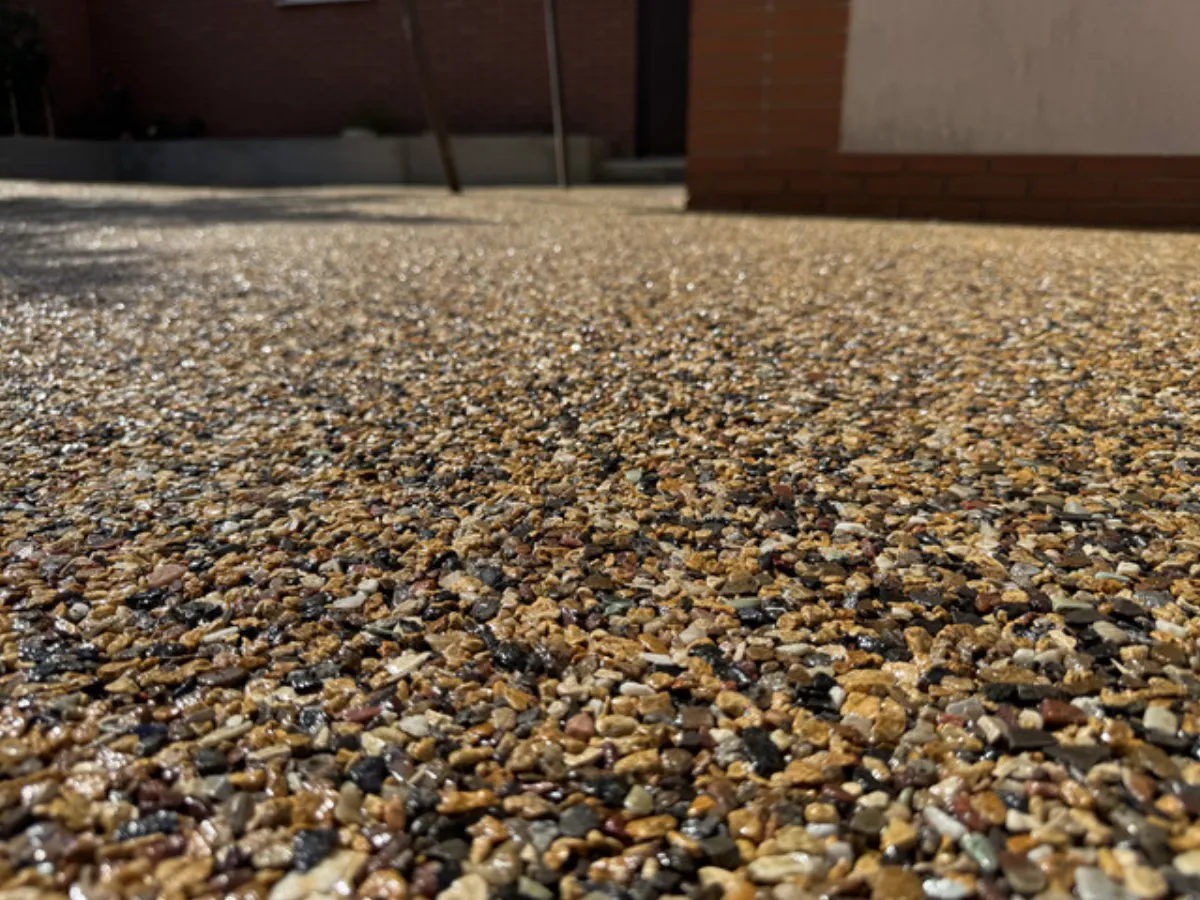
Almost any solid substrate can take it, including concrete, timber, metal and asphalt, which makes it a common resurfacing choice over decks that are structurally fine but look tired.
- Terraces, balconies and lanais
- Pool surrounds and pool decks
- Garden paths and private yards
- Entryways and building forecourts
- Driveways and parking aprons
- Hotels, restaurants and retail frontages
- Plazas and pedestrian areas
The 2 limits worth knowing are live movement and load. A slab that is still cracking will telegraph through, and a driveway needs a reinforced base at least 4 inches thick before any decorative layer goes down.
Why it suits a Florida deck
- It drains. The bound aggregate stays porous, so an afternoon downpour passes straight through instead of standing in puddles.
- It is not slick when wet. The stone texture gives grip barefoot, which matters most on a pool deck.
- It handles chlorine and salt air. Cured polyurethane and natural stone are both unaffected by pool chemistry and coastal exposure.
- It stays cooler than dark concrete. Light marble and pebble aggregates reflect more sun than a gray slab.
- UV stability. With an aliphatic binder the surface keeps its clarity and color rather than yellowing.
Common questions on stone carpet
Why stone carpet instead of pavers
No joints means no weeds, no settling units and no lipped edges to catch a toe. The surface is fully water permeable, so it does not pond. It grips when wet, it does not chip at the edges, and the finish is one of a kind rather than a catalog pattern. Installed cost is comparable to quality pavers once bedding, edging and labor are counted.
What bases it can go over
Any sound hard surface, including concrete, asphalt, timber and metal. Concrete is ground and primed. Asphalt is inspected for live cracks and movement first. Surface temperature should be at least 50 degrees F at the time of application and the base must be dry.
How long a stone carpet lasts
10 to 15 years or more when it is laid on a properly prepared base. The variables that decide it are the quality of the base preparation, the binder specification, since aliphatic resin does not yellow under UV, and adherence to the mixing and placement procedure.
Aliphatic or aromatic binder
Outdoors, aliphatic only. Aromatic resin costs less but yellows in sunlight within 1 to 2 years, which is very obvious on white marble. Aliphatic keeps its clarity for the service life of the surface.
Which aggregate to choose
It comes down to budget and the look wanted. Marble gives a bright, formal finish on terraces and entryways. Pebble suits garden paths and pool decks. Quartz gives a fine texture for interiors and stair treads. Gravel suits driveways and service areas. Samples are worth seeing before deciding.
Whether it can take a car
Yes, provided the concrete base is rated for the load, which means reinforced concrete at least 4 inches thick. On that base the surface carries passenger cars and light trucks without issue. Driveway builds are laid thicker, usually 0.6 to 0.8 inches.
How it is maintained
Rinse with a garden hose or a pressure washer on a wide fan tip. Stains lift with a mild detergent. There is nothing to paint, sand or seal.
Whether it is a DIY job
Technically it can be done, but the failure modes are unforgiving. A wrong mix ratio, poor base preparation, or working past the pot life of the resin all lead to delamination within a season. Redoing a failed deck costs more than having it laid once.
Whether it gets hot underfoot
Light-colored aggregates such as white and cream marble or pale pebble run noticeably cooler than dark concrete or dark pavers in direct sun. Dark gravel mixes get hot, so they are not specified on barefoot areas like pool decks.