Epoxy & Concrete Resurfacing Systems
Epoxy resurfacing rebuilds the top of an existing concrete slab instead of replacing it. The system is a 2-component resin and amine hardener mixed at 10 to 1 by weight, then applied as a primer, a repair mortar, a body coat and a topcoat. Pot life runs 20 to 30 minutes at 68 degrees F, light foot traffic returns in 24 to 48 hours, and full cure takes 7 days. Outdoors the epoxy always sits under an aliphatic polyurethane topcoat, because bare epoxy ambers in direct sun.
Most concrete in South Florida does not fail structurally. It fails cosmetically and then functionally. The surface spalls, control joints open, and moisture and chloride work into the top quarter inch until a sound slab becomes one nobody wants to walk on barefoot. Epoxy resurfacing gives that slab a second life without demolition and a re-pour.
Epoxy is not a single product. It is a family of 2-component thermosetting systems that can act as a primer, a moisture barrier, a crack filler, a body coat, a levelling compound, or the binder that holds decorative aggregate together. On a typical resurfacing job it does most of those things on the same slab.
What epoxy resin actually is
An epoxy resin is a bisphenol-A based oligomer, a viscous clear liquid carrying reactive epoxide groups at the ends of its molecules. On its own it stays liquid indefinitely. Add an amine hardener and those epoxide groups open and cross-link into a dense polymer network.
That cross-linking explains how cured epoxy behaves. It is rigid, it bonds tenaciously to concrete, steel, ceramic, wood and glass, it shrugs off water and most common chemicals, and it cannot be melted back into a liquid.
Cross-linking is also why the mix ratio matters so much. The reaction consumes resin and hardener in fixed proportions. Guessing at the ratio leaves unreacted material in the film, and that material stays soft, stays tacky and never reaches full strength. Ratio errors show up as a floor that never stops marking under a fingernail.
How the hardener changes the system
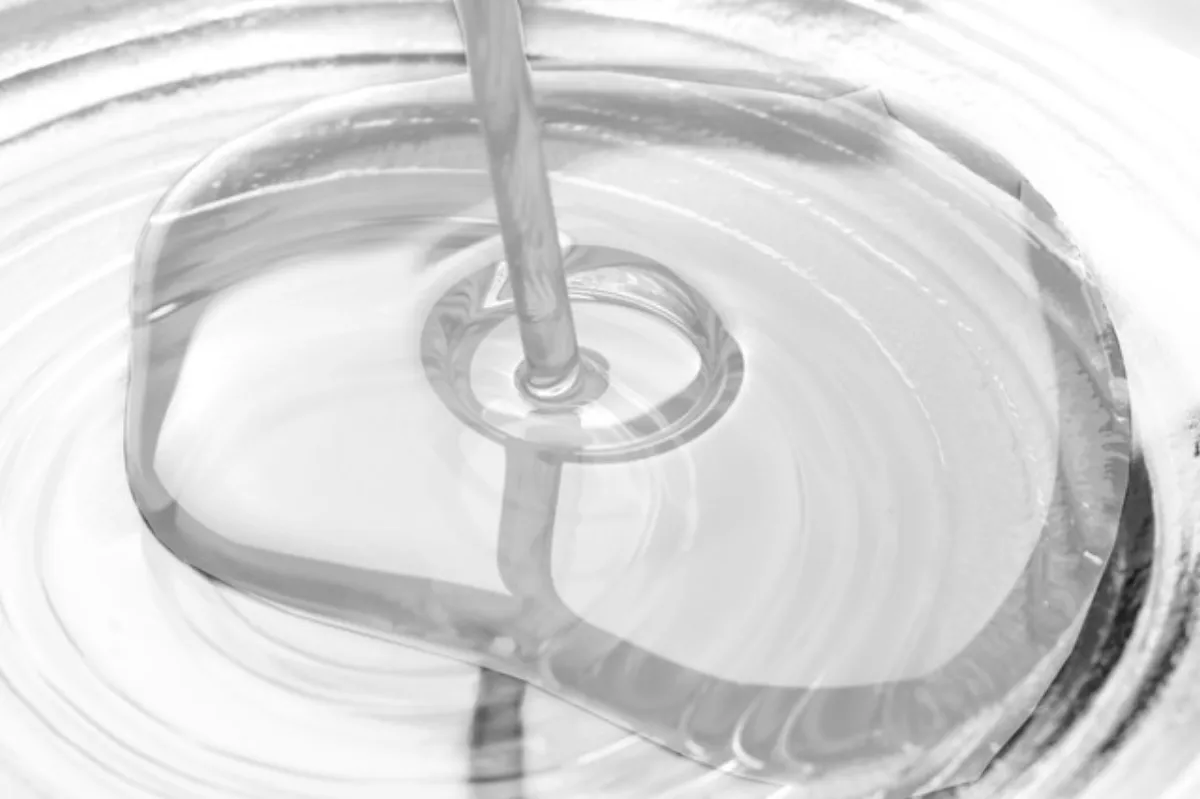
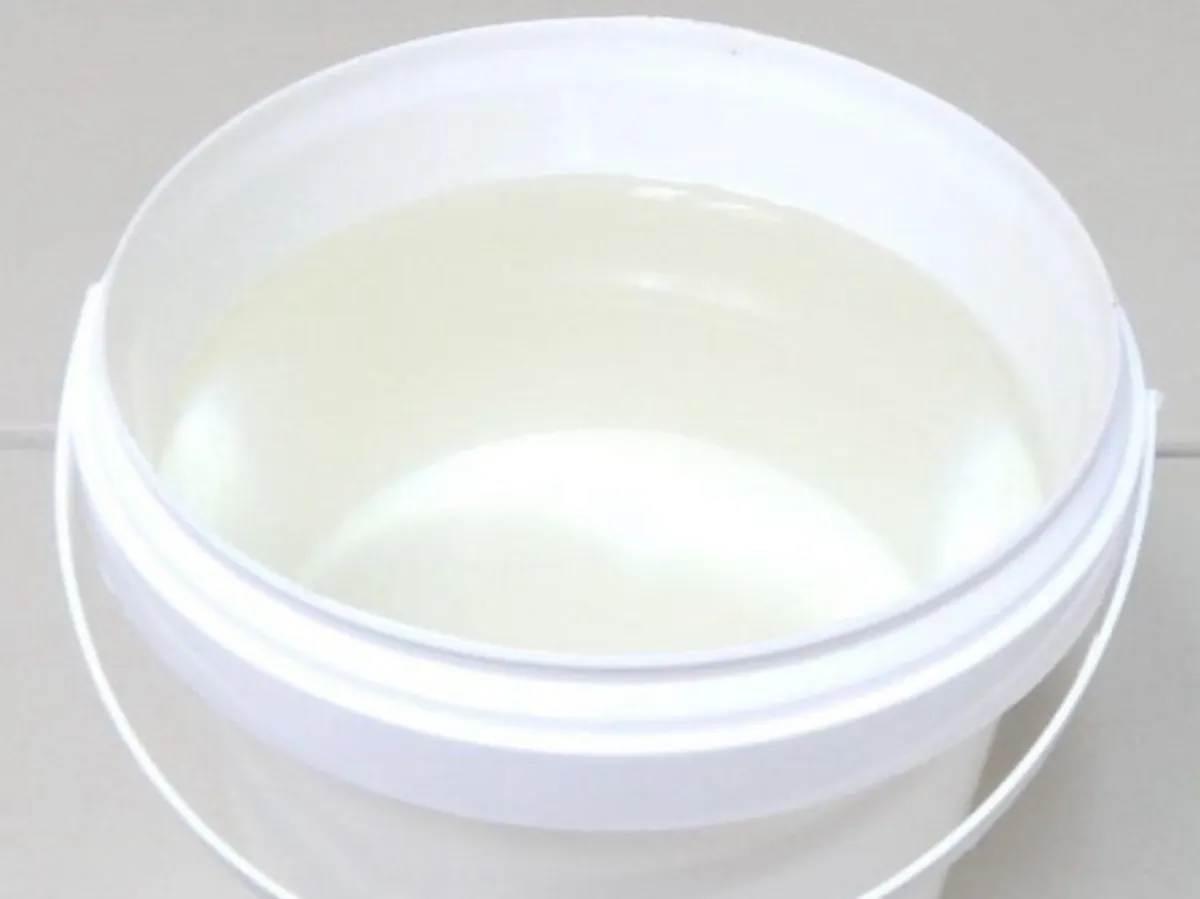
The resin supplies the backbone. The hardener decides cure speed, exotherm and the mechanical properties of the finished film. 2 aliphatic amine hardeners cover the great majority of construction and repair work.
| Hardener | Ratio by weight | Behavior |
|---|---|---|
| PEPA polyethylene polyamine |
10 to 1 | The standard fast hardener. Higher reactivity, so it kicks off sooner. Pot life of 20 to 30 minutes at room temperature and full cure in 7 days. |
| DETA diethylenetriamine |
10 to 1 | Lower viscosity, which makes it easier to wet out aggregate and penetrate a porous slab. Full cure in 7 days at room temperature. |
Both are aliphatic amines and both deliver broadly similar cured properties, so for most floor and repair work the practical difference is small. The lower viscosity of DETA helps when resin has to soak into concrete or coat a large volume of stone. The faster start of PEPA helps when foot traffic has to come back sooner. Exact proportions always come from the technical data sheet of the specific product in use.
How a resurfacing system is layered
- Preparation. Grinding or shot-blasting opens the concrete pore structure, removes laitance and old coatings, and gives the primer something mechanical to grip. Nothing bonds to a sealed or contaminated slab.
- Repair. Cracks are routed and filled, spalls and delaminated patches are cut out and rebuilt with epoxy mortar, and joints are treated according to whether they need to stay movable.
- Primer. Low-viscosity epoxy is rolled or squeegeed into the prepared surface. On damp slabs this doubles as the moisture-tolerant tie coat.
- Body coat. Self-levelling epoxy, or epoxy mixed with a decorative aggregate and troweled to depth. This is where the new wearing surface is actually built.
- Seal or topcoat. A clear seal over aggregate systems, or an aliphatic polyurethane topcoat on anything exposed to direct sun.
Why exterior epoxy gets a polyurethane topcoat. Epoxy is an outstanding build coat and an outstanding binder, but its aromatic backbone ambers under sustained UV. Indoors that is irrelevant. On a Florida driveway, pool surround or lanai it is not, so the epoxy stays underneath and a UV-stable aliphatic polyurethane takes the sunlight. There is more detail in the guide on aliphatic vs aromatic binders.
How much resin a project needs
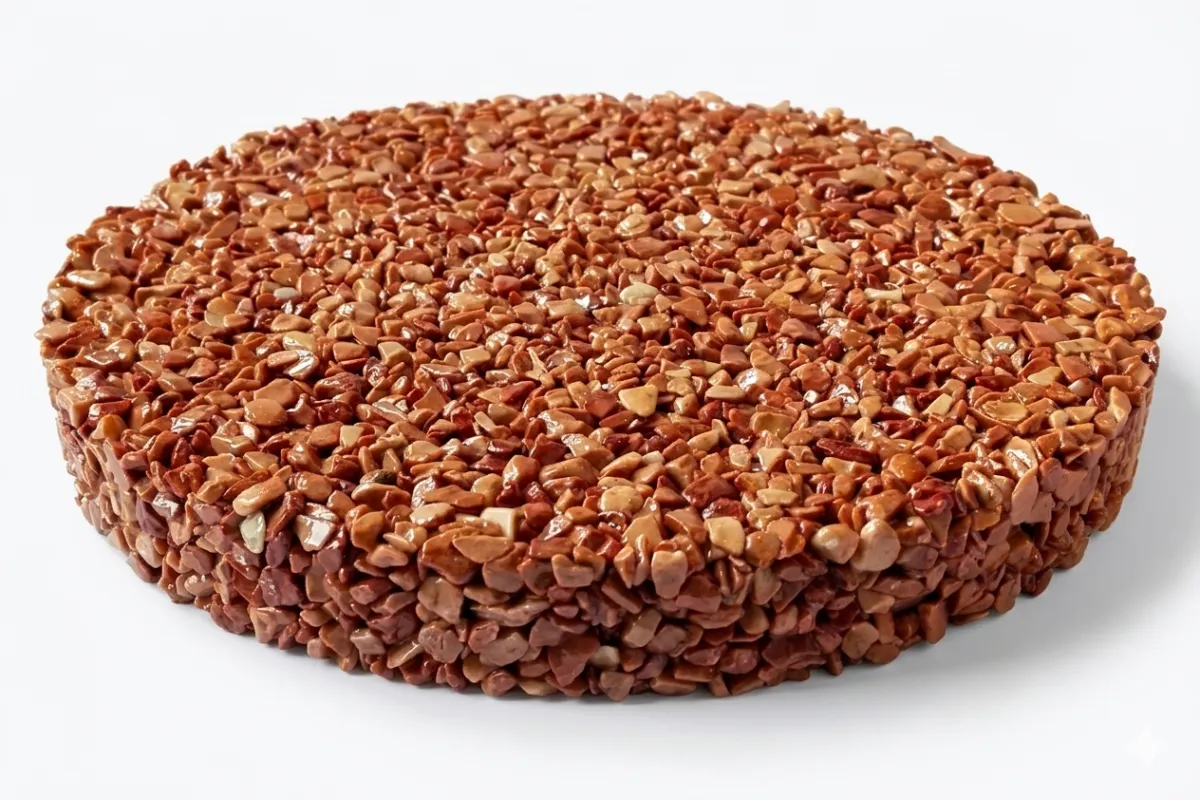
Coverage depends on how porous and how flat the slab is, and on the depth being built. These are the working figures used for estimating. A rough or thirsty slab will always take more than a steel-troweled one.
| Application | Resin coverage | Per 100 sq ft |
|---|---|---|
| Priming bare concrete | 0.05 to 0.07 lb per sq ft | about 5 to 7 lb |
| Self-levelling body coat | about 5.7 lb per sq ft for each inch of build | about 140 lb at 0.25 inch |
| Decorative aggregate binder | 1 lb of resin per 12 to 15 lb of aggregate | set by stone size and layer depth |
| Crack and spall repair | as required by the void volume | varies with the damage found |
For a stone carpet the binder is only part of the order. The aggregate itself, whether marble chip, quartz or rounded pebble, plus primer and any pigment the design calls for, all have to be counted. The stone carpet page covers that build in full.
Where these systems get used
- Decorative bound aggregate. Epoxy is the binder that locks marble, quartz or pebble into a seamless, water-permeable surface over an existing slab.
- Self-levelling floors. Garages, workshops, utility and back-of-house areas where a hard, chemical-resistant, easily washed floor is worth more than softness underfoot.
- Concrete repair. Filling cracks, chips and joint edges, and rebuilding spalled sections back to line and level.
- Waterproofing. Planters, tanks, below-grade walls and foundation details, where a continuous film has to stop water movement.
- Bonding and anchoring. Steel to concrete, ceramic, timber, glass and rigid plastics. Adhesion is the defining property of epoxy.
- Cast and decorative work. Countertops, sills, thresholds and inlays.
The common thread is a slab that is structurally sound but finished badly, worn out or wrong for its current use. Resurfacing costs a fraction of demolition and normally puts the area back in service within 48 hours.
Technical data at a glance
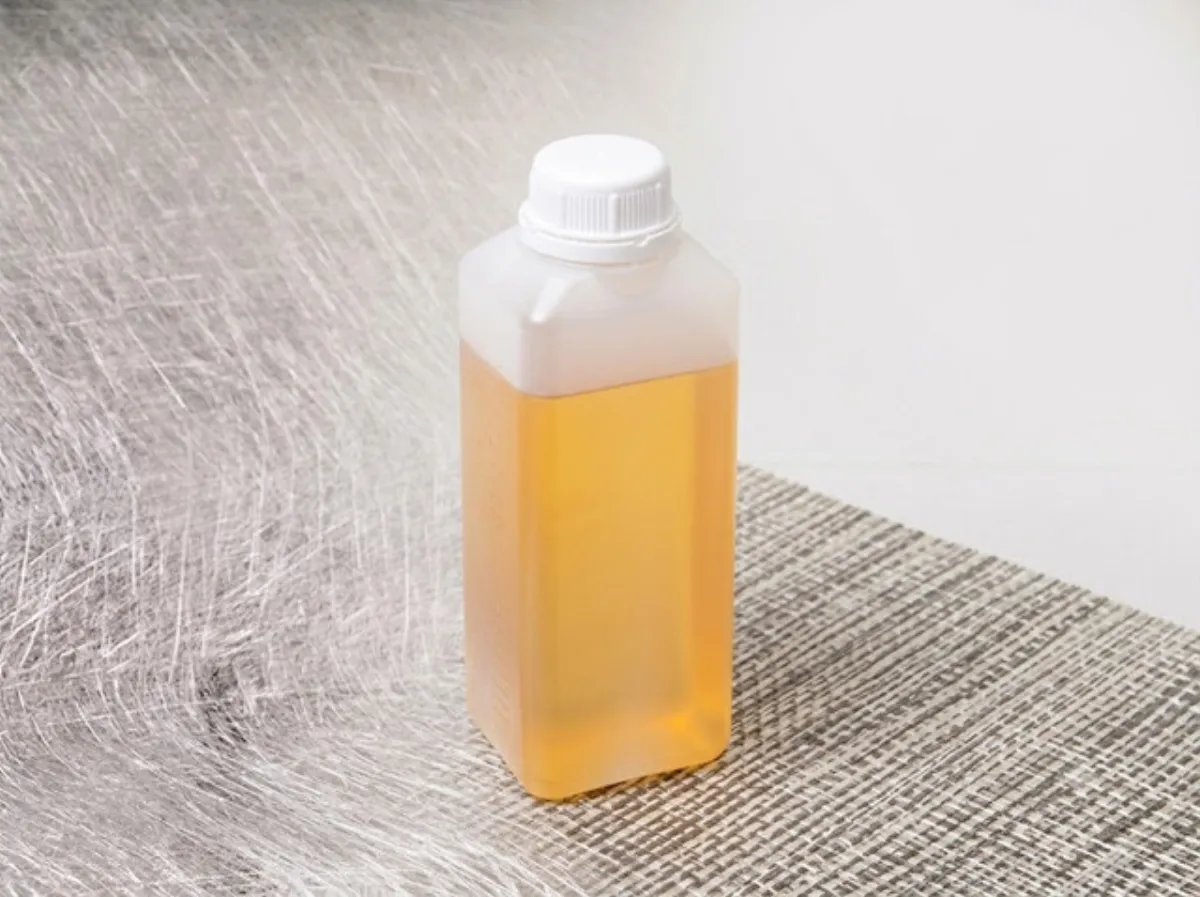
| Type | 2-component bisphenol-A epoxy resin |
| Appearance | Viscous, clear to pale liquid |
| Hardeners | Aliphatic amines, PEPA or DETA, at 10 to 1 by weight |
| Pot life | 20 to 30 minutes at 68 degrees F |
| Foot traffic | 24 to 48 hours |
| Full cure | 7 days at 68 degrees F |
| Minimum application temperature | 50 degrees F, with 64 to 77 degrees F preferred |
| Resistance | Chemicals and moisture. Exterior exposure requires an aliphatic polyurethane topcoat |
| Storage | Sealed factory packaging at 41 to 77 degrees F, out of direct sun, for 12 months from manufacture |
What Florida conditions change
- Heat compresses the working window. Cure chemistry roughly doubles in speed for every 18 degrees F of temperature rise. A pot life of 20 to 30 minutes at 68 degrees F drops to 10 to 15 minutes once the slab reaches 86 degrees F. In summer that means small batches, early starts and shaded material.
- Slab moisture is the usual culprit. Slab-on-grade construction over a high water table pushes vapor up through the concrete. Coating over it traps the vapor and lifts the film, so every job starts with a moisture reading and a moisture-tolerant primer where the number is high.
- Rain has to be designed around. An afternoon storm on a coating that has not skinned over ruins it. Exterior work is scheduled against the forecast, and permeable aggregate systems are detailed so water leaves the surface rather than sitting on it.
- UV is relentless. Hence the aliphatic topcoat on anything the sun reaches, without exception.
Is epoxy safe to handle
Uncured resin and amine hardeners irritate skin, eyes and the respiratory tract. Nitrile or rubber gloves, eye protection and real ventilation are not optional on any job that involves mixing.
Amine hardeners in particular are sensitisers, and repeated casual exposure is how installers develop a lasting reaction to them. Once fully cured, the polymer is inert and non-toxic. The hazard belongs entirely to the wet stage, which lasts under an hour per batch.
Common questions on epoxy resurfacing
How much resin a job takes
Priming bare concrete runs 0.05 to 0.07 lb of resin per sq ft, about 5 to 7 lb per 100 sq ft. A self-levelling body coat takes roughly 5.7 lb per sq ft for every inch of build, so about 140 lb covers 100 sq ft at 0.25 inch. A decorative aggregate system uses around 1 lb of resin for every 12 to 15 lb of stone. The actual figure comes from a measured area and a slab porosity check.
The difference between PEPA and DETA
Both are aliphatic amines and both give similar cured properties. PEPA is slightly more reactive, so it starts to set sooner. DETA has lower viscosity, which helps it wet out aggregate and penetrate porous concrete. For most construction work the difference is marginal and either one performs well.
Whether the mix ratio can be adjusted
10 parts resin to 1 part hardener by weight is the standard for both PEPA and DETA, and it cannot be adjusted. Extra hardener does not speed the cure. It leaves unreacted amine in the film, which stays soft and can bloom to the surface. Less hardener leaves the network incompletely cross-linked. Always weigh, never estimate by eye.
How long epoxy takes to cure
Pot life after mixing is 20 to 30 minutes at 68 degrees F. Light foot traffic after 24 to 48 hours. Full cure and full strength at 7 days. Higher temperatures accelerate everything, roughly halving the times for each 18 degrees F of rise, which in a Florida summer is a scheduling constraint rather than a bonus.
Whether epoxy can go over an existing slab
Over a sound slab, yes, and that is the entire point of resurfacing. It cannot go over a slab that is actively cracking from movement, that is contaminated with oil or old sealer, or that is passing significant moisture vapor without a moisture-tolerant primer first. Mechanical preparation and a moisture reading come before any resin does.
Whether epoxy yellows in the sun
Bare epoxy ambers under sustained UV, which is why no exterior surface is left as bare epoxy. Outdoors the epoxy is the build coat or the binder and an aliphatic polyurethane topcoat carries the exposure. Indoor floors and covered lanais do not have this issue.
Whether epoxy is toxic
In the wet stage the resin and the amine hardeners irritate skin and mucous membranes, and repeated exposure can sensitise. Gloves, eye protection and ventilation are required during mixing and application. Fully cured epoxy is chemically inert and non-toxic, which is why it is used on food-industry and healthcare floors.
How unused resin should be stored
Tightly sealed in its factory packaging, in a cool dark place between 41 and 77 degrees F, away from direct sunlight. Shelf life is 12 months from the date of manufacture. Do not freeze. Resin that has crystallized in cold storage can often be recovered by gentle warming, but partially reacted material cannot.